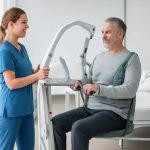
Caring for a loved one at home often means navigating the physical demands of mobility assistance. For individuals who can bear some weight but struggle to rise from a seated position, daily transfers become a recurring challenge. Shifting from a bed to a chair or from a wheelchair to a toilet can feel exhausting and risky for both the caregiver and the patient. This is where a specialized solution transforms the experience. A sit to stand lift for home use bridges the gap between full dependency and independent movement. It offers a mechanical advantage that reduces strain on caregivers while providing the user with a sense of participation in their own transfers. Unlike full-body lifts that require complete passivity, a sit-to-stand device engages the patient’s own strength, making the process more dignified and therapeutic. Understanding how this equipment works, what to look for, and real-world outcomes can help families make an informed decision that improves quality of life at home.
Why Home Care Demands a Sit to Stand Lift for Safe Transfers
The physical toll of manual transfers is often underestimated. Caregivers routinely lift, pivot, and support patients multiple times a day, leading to back injuries, shoulder strain, and chronic fatigue. According to occupational health data, healthcare workers and family caregivers alike face high rates of musculoskeletal disorders when performing transfers without mechanical aid. For patients, the risks are equally severe. Falls during a transfer can result in fractures, bruises, or loss of confidence. A sit to stand lift for home use directly addresses these dangers by providing a stable, controlled lifting mechanism. The device works by positioning a sling behind the user’s back and under the arms or around the torso. As the lift activates, it gently supports the patient’s weight while allowing them to bear weight through their legs. This partial weight-bearing is crucial for maintaining muscle strength and bone density, especially for older adults recovering from surgery or living with conditions like arthritis or Parkinson’s disease.
Beyond safety, these lifts promote autonomy. Many patients resist help because they feel they are losing control over their bodies. A sit-to-stand lift invites them to actively participate in the transfer, which can boost morale and speed up rehabilitation. Caregivers also benefit because they no longer need to bear the full load. Instead, they guide the lift and monitor the patient’s stability. For households with limited space, many modern lifts are designed to be compact and maneuverable, fitting through doorways and under furniture. The versatility of these devices means they can be used in multiple rooms—bedroom, bathroom, living area—reducing the need for multiple pieces of equipment. When families invest in a sit to stand lift for home use, they are not just buying a machine; they are purchasing peace of mind and a safer daily routine.
It is also worth noting that these lifts come in different configurations. Some use a manual hydraulic pump, while others operate on battery-powered motors. The choice depends on the caregiver’s strength and the frequency of use. For home environments, battery-powered lifts often provide smoother transitions and require less physical effort. Key safety features include locking casters, padded slings, and adjustable knee pads. A well-designed lift should also have a low base clearance to slide under most chairs and beds. By understanding these fundamentals, caregivers can select a model that matches their specific needs. Remember that the goal is not just to lift, but to lift safely and comfortably every time.
Key Features to Look For in a Sit to Stand Lift for Home Use
Choosing the right piece of equipment requires careful evaluation of several factors. Not all lifts are created equal, and what works in a hospital or rehabilitation facility may not suit a private home. The first consideration is the weight capacity. Most home-use sit-to-stand lifts support between 300 and 450 pounds, but it is essential to verify the maximum safe working load against the user’s weight. Exceeding the limit can lead to mechanical failure or instability. Next, examine the lifting mechanism. Electric lifts typically use a rechargeable battery that provides multiple lifts on a single charge, while manual hydraulic lifts rely on a pump handle operated by the caregiver. For home caregivers who may be elderly themselves, an electric model reduces physical strain and allows for smoother, more controlled movements.
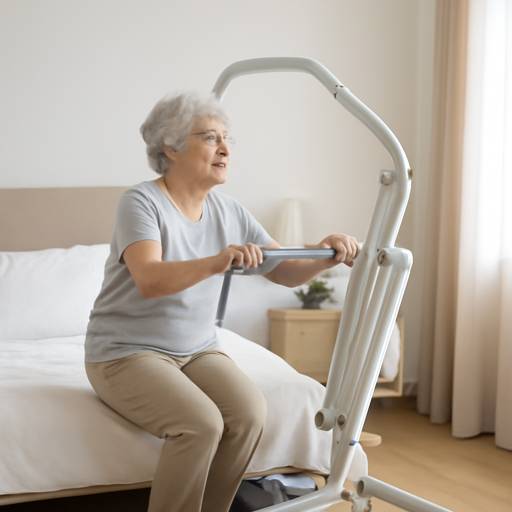
The sling design also matters greatly. Sling styles vary from full-back support to vest-style or padded underarm loops. For a patient who can bear weight and has good trunk control, a simple vest sling may suffice. For those with weaker core muscles, a wraparound sling that supports the torso and head is preferable. Quick-release clips and adjustable straps make the sling easier to attach and remove, saving time during multiple daily transfers. Additionally, the lift’s base should be wide enough to provide stability but narrow enough to fit around standard wheelchairs and commodes. Many models feature spreading legs that can be adjusted to accommodate different seating widths. Casters, or wheels, should lock securely to prevent rolling during transfers and should be made of non-marking material to protect flooring.
Another critical feature is the knee pad or knee block. This component stabilizes the user’s legs during the lift, preventing the knees from buckling forward. A padded, contoured knee support improves comfort and reduces pressure points. For users who have difficulty with balance, a knee pad that can be positioned at the correct height is essential. Some lifts offer adjustable leg supports or footplates to accommodate varying leg lengths. Battery life indicators and emergency lowering functions add an extra layer of safety. When a power lift stops mid-transfer, the ability to manually descend the patient prevents panic and injury. Finally, consider the lift’s portability. Some models are designed to be disassembled for travel, while others are stationary but have carrying handles. No matter which features are prioritized, always test the lift with the intended user or seek a rental trial before purchasing. Investing time upfront ensures that the sit to stand lift for home use becomes a reliable partner in care rather than a frustrating obstacle.
Real-World Success: How Families Benefit from a Sit to Stand Lift at Home
Stories from actual households illustrate the transformative impact of this technology. Consider the case of the Martinez family in suburban Ohio. Their father, Robert, had undergone hip replacement surgery and was unable to stand from a seated position without significant help from his daughter, Maria. Daily transfers from the recliner to the bathroom were exhausting for both. Maria, who had a history of back issues, struggled to support Robert’s weight as he tried to push himself up. After researching options, they purchased a sit to stand lift for home use. Within the first week, Maria noticed a dramatic reduction in physical strain. Robert, who initially felt anxious about using a machine, soon appreciated the gentle lift and the ability to bear weight through his legs. His physical therapist reported improved strength and confidence because the lift encouraged him to engage his muscles during transfers. Within three months, Robert could stand with minimal assistance, and the lift was used less frequently—proof that the device also served as a rehabilitation tool.
Another example comes from a family caring for a loved one with multiple sclerosis. The patient, James, had fluctuating leg strength and often needed help getting out of his motorized wheelchair. His wife, Sarah, struggled to maintain a safe transfer technique, especially when James experienced sudden muscle fatigue. After consulting with an occupational therapist, they brought in a sit-to-stand lift with a padded knee brace and adjustable leg supports. The lift allowed James to transfer to the toilet independently with a caregiver nearby, preserving his dignity and reducing accidents. Sarah shared that the lift “gave her husband back his privacy and gave her back her back.” The lift’s compact footprint meant it could be stored next to the bed without cluttering the room. Over time, the family learned to integrate the lift into every part of their routine—from getting out of bed in the morning to sitting down for meals.
Real-world feedback also highlights the importance of training. Many home caregivers initially struggle with positioning the sling or aligning the lift under a chair. Several manufacturers offer video tutorials or in-home demonstrations, which can make the learning curve much gentler. One caregiver noted that after a short practice session, she could complete a transfer in under two minutes. Ease of use is a recurring theme: caregivers report that once they master the basic steps, the lift becomes second nature. Moreover, the devices often come with maintenance guides that help families prolong the equipment’s lifespan. Simple actions like cleaning the sling after each use and checking battery connections weekly prevent unexpected failures. These real-world examples prove that a sit-to-stand lift is not merely a piece of medical equipment but a cornerstone of sustainable home care. By investing in the right model and learning how to use it effectively, families can create a safer, more dignified environment for everyone involved.