Modern logistics lives and dies by minutes saved at the dock door. When trailers arrive back-to-back, the teams that move freight fastest—while protecting people and products—win the day. That’s where rollers for unloading trucks come in. Purpose-built roller solutions transform the gap between trailer and warehouse into a smooth-flowing path that reduces manual lifting, cuts cycle times, and keeps parcels, totes, and pallets moving with far less effort. Whether serving high-velocity express hubs, cross-border gateways, or manufacturing inbound lanes, the right roller configuration turns unloading into a repeatable, ergonomic process.
What Are Rollers for Unloading Trucks and Why They Matter
Rollers for unloading trucks are mechanical or powered components arranged in frames that allow cartons, sacks, totes, and even palletized goods to move freely from a truck bed into a facility. They come in various formats—fixed or flexible frames, gravity-fed or motorized zones, full cylindrical rollers or skate wheels—and they support a range of loads from lightweight parcels to heavy components. Their mission is simple: reduce manual handling and make the physical transfer of goods consistent, predictable, and safe.
For high-throughput environments like express parcel and e-commerce fulfillment, flexible gravity roller conveyors are often the first choice. They expand to reach deep into trailers, conform to dock layouts, and collapse for storage. The rollers’ low friction lets packages glide forward with a slight pitch, while side guides keep loads contained. For heavier or more delicate items, full-diameter steel or coated rollers provide better support and lower contact stress than skate wheels. In operations that demand continuous, controlled flow—think fragile goods, electronics, or mixed-size cartons—powered roller systems (often called motorized roller or MDR conveyors) ensure gentle starts, stops, and accumulation without box-to-box impact.
Beyond speed, the advantage is ergonomics and safety. Well-designed unloading lines reduce the number of times a person must lift, twist, and carry. That translates into fewer strains and fewer lost-time incidents. Add basic accessories—end stops, anti-roll-back features, dock transition plates—and the unloading task becomes both faster and less risky. Integration is another win: rollers can form the front end of a complete material flow that includes telescopic conveyors, sortation, scanning, and AS/RS staging. In many cross-border and regional hubs, roller-based unloading bridges the irregular world of inbound trailers with the structured precision of automated warehouse systems.
The ROI case is straightforward. By shortening trailer dwell time, you can receive more trucks per shift or reduce overtime during peak surges. A reduction in manual handling lowers injury-related costs. And consistency enhances quality metrics like damage rates and mis-sorts. In markets where labor availability is tight and throughput targets keep climbing, these compounding benefits make rollers for unloading an essential backbone of dock operations.
Selecting the Right Roller System: Materials, Specs, and Layout
Choosing the best rollers for unloading trucks starts with matching equipment to the product mix, throughput, and environment. Begin with roller type. Full cylindrical rollers (commonly 38 mm, 50 mm, or 60+ mm diameters) offer broad support and higher load capacity than skate wheels. For mixed or heavy cartons, a 50 mm galvanized steel roller with precision bearings is a workhorse choice, while 60+ mm rollers suit bulkier or irregular freight. For lighter parcel traffic, skate-wheel sections reduce cost and inertia but require better carton bottoms to roll smoothly. Where cleanliness or corrosion resistance is critical—coastal climates, food, or pharma—stainless or zinc-plated rollers with sealed bearings are prudent. If product surfaces are delicate or polished, consider PVC sleeves or rubber-coated rollers to increase friction and prevent scuffs.
Next, consider pitch and center distance. Shorter roller spacing (center-to-center) ensures even support, especially for small cartons. A common rule is to keep at least three rollers under every load at all times. For gravity systems, a gentle slope—often 3 to 5 degrees—promotes controlled movement. Too steep and cartons run away; too shallow and they stall. End stops and intermediate brakes help moderate speed on long runs. In powered versions, motorized roller zones create accumulation without pressure, allowing product to queue inside the trailer mouth without damage. This is ideal when pairing with scanning, weighing, or dimensioning systems.
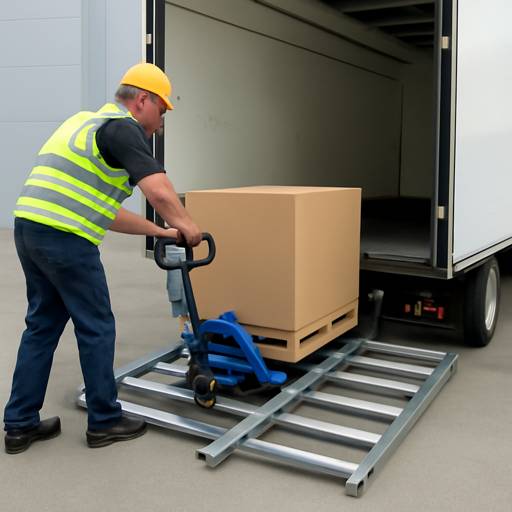
Frame format also matters. Flexible/expandable frames with locking casters let teams snake rollers into trailers and curve around obstacles. They’re perfect for variable dock assignments and seasonal surges. Fixed frames work best when docks are standardized and building flow is stable. For docks handling bulk sacks or soft packaging, integrate ball transfer tables at the transition to allow omnidirectional nudging and alignment. Where pallets are common, a separate heavy-duty live-roller or chain conveyor can stage skids, while a gravity section handles cartons from the same trailer.
Layout decisions should account for dock levelers, vehicle restraints, and trailer bed conditions. Transition plates close height gaps between the dock and the first roller; side rails prevent off-tracking. Aim for a conveyor width that gives at least 50 mm clearance on either side of the largest carton. If you handle electronics or printed circuits, add ESD-safe rollers and bonding. And always plan clearance for walkways, emergency egress, and forklift traffic. For organizations exploring procurement, browse solutions labeled specifically as rollers for unloading trucks to compare load ratings, roller diameters, and flexible versus powered configurations aligned to your operating profile.
Deployment, Safety, and Maintenance: From Dock to Driver
Implementing a roller-based unloading line is as much about process as equipment. Start with an onsite assessment: What product types and sizes dominate inbound loads? How deep are typical trailers? What is the targeted unload time per door? Map the current workflow from door opening to the first accumulation point inside the facility. Pilot a single dock with a flexible gravity roller and a powered final transfer to observe choke points, speed profiles, and operator movement. Collect data—boxes per minute, dwell time, and labor utilization—before scaling to multiple doors.
Safety is foundational. Establish a pre-unload checklist: verify vehicle restraints or wheel chocks, confirm dock leveler position, ensure the first roller height aligns with the trailer bed, and post signage detailing pinch-point awareness. Side guards prevent cartons from dropping into aisles; toe boards and bumpers protect footwear and roller ends. In gravity systems, use speed controllers on long declines and end stops near scanning stations. For MDR zones, program gentle acceleration and deceleration to protect products and fingers. Where voice or RF systems are used, keep headset cables clear of moving rollers. Lighting inside trailers reduces missteps during early or late shifts, and clear floor markings guide operators when repositioning flexible frames.
Maintenance keeps performance consistent. Set weekly cleaning to remove tape, shrink wrap, and dust that build drag. Lubricate bearings per manufacturer guidance; sealed bearings reduce maintenance but may have different load limits. Inspect center distances and roller alignment—bent shafts or uneven frames cause product skew and jams. Keep a small stock of spare rollers, bearings, and end stops for fast swap-outs. If your operation runs seasonal peaks, preemptively inspect the roller fleet before surge weeks to avoid mid-peak downtime. For powered systems, monitor motorized roller temperature and current draw; rising trends can signal bearing wear or belt tension issues.
Consider two real-world scenarios. At a regional express hub handling 20,000 parcels per shift, replacing ad hoc hand unloading with expandable gravity rollers plus a short MDR merge cut unload time per trailer by 30% and reduced minor strains by nearly half. Operators reported less fatigue, allowing consistent pace across the shift. In a cross-border warehouse receiving mixed cartons and light components, a hybrid layout—ball transfer tables at the dock mouth, flexible rollers into the trailer, powered accumulation to inbound QC—eliminated carton crushing and streamlined scanning. In both cases, the outcome was the same: tighter trailer turns, predictable inbound flow, and a safer dock environment.
Finally, tie the equipment to SOPs and training. Teach operators to set correct slope, lock casters, check clearances, and use end stops. Define who adjusts what—and when—to avoid ad hoc changes. Capture KPIs like cartons per labor hour, truck dwell time, and incident rates to quantify performance. With thoughtful deployment and ongoing care, rollers for unloading trucks become a durable, scalable asset—one that turns the chaotic start of inbound logistics into an orderly, high-velocity gateway to the rest of your operation.