The simple act of standing is a fundamental human movement, yet for millions recovering from surgery, living with chronic conditions, or managing age-related weakness, it becomes a complex and risky endeavor. Traditional manual transfers often place immense strain on caregivers and create anxiety for patients. Enter the electric sit to stand lift, a sophisticated piece of medical equipment designed to bridge the gap between complete bed rest and independent mobility. Unlike a full-body sling lift, a sit-to-stand unit works with the patient’s existing ability to bear weight, using a powered mechanism to guide them from a seated position to a stable stance. This technology is not just about moving a person; it is about preserving dignity, accelerating rehabilitation, and radically reducing the physical toll on healthcare workers and family members alike.
The core engineering of these lifts focuses on controlled, smooth motion. A padded knee brace stabilizes the legs, while a comfortable sling or harness supports the torso. As the motor engages, the lift gently tilts the patient forward and upward, mimicking the natural biomechanics of standing. This active participation is crucial. Studies in physical therapy journals consistently show that patients who actively engage in standing transfers retain muscle strength and joint range of motion more effectively than those who are passively moved. The electric component is the differentiator, eliminating the manual effort required from a caregiver to crank or pump a hydraulic mechanism. This allows a single caregiver to safely manage patients who would otherwise require two or three people to assist. The precision of the speed control ensures that the transfer is never jarring, building trust and reducing the fear of falling that often accompanies assisted mobility.
When selecting high-quality equipment for a care facility or home environment, choosing the right electric sit to stand lift involves evaluating the base design, battery life, and weight capacity. Modern units often feature power-adjustable leg spreads and wheeled bases that slide easily under beds and chairs, making the transfer seamless from one surface to another. The integration of these devices into daily care routines drastically lowers the incidence of caregiver back injuries, which remain one of the most common workplace injuries in the healthcare sector. For the patient, the psychological benefit of standing, even for a few moments, cannot be overstated. It provides a change in perspective, improves circulation, and can significantly boost morale during a long recovery process.
Key benefits of electric sit to stand lifts include:
- Reduced physical stress on caregiver spines and shoulders.
- Active patient participation maintaining muscle tone.
- Safer, more controlled transfers compared to manual techniques.
- Lowered risk of falls during high-risk standing transitions.
- Enhanced patient confidence and dignity through upright positioning.
Core Mechanics and Prescribing Criteria for Electric Sit to Stand Lifts
Understanding when a sit-to-stand lift is appropriate is just as important as knowing how it works. These devices are specifically designed for patients who can bear at least partial weight on their legs and have some upper body strength to hold onto the lift’s handles or sling. A patient with a full hip or knee replacement in the immediate post-operative phase may be an ideal candidate, as the lift protects the surgical site while allowing controlled standing. Conversely, a patient with a severe spinal cord injury or complete lower extremity paralysis would require a full-body sling lift, as the sit-to-stand mechanism depends on the patient’s ability to assist with the movement. The clinical assessment, often performed by an occupational or physical therapist, evaluates leg strength, trunk control, and cognitive ability to follow simple commands during the transfer.
The mechanical heart of the electric lift is its linear actuator or high-torque motor. These systems are typically powered by rechargeable batteries, allowing for use in environments without convenient wall outlets, such as hallways or bathrooms. Safety is paramount. Most units feature emergency stop buttons, manual override cranks for use during a power failure, and safety-locked casters to prevent rolling during the transfer. The sling or harness itself is a critical component, designed to be breathable, washable, and adjustable for different body types. Some slings are designed for specific tasks, such as toileting, where they feature open contours to allow for hygiene care without removing the patient from the lift. The knee pad is another area of design focus, with high-density foam contoured to distribute pressure evenly across the shins, preventing discomfort or skin breakdown during the standing phase.
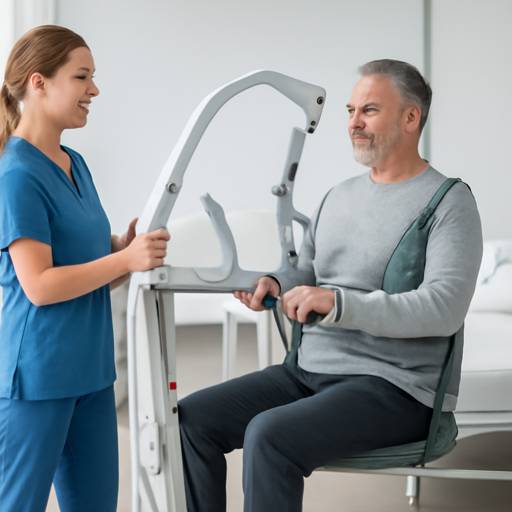
The selection process requires careful attention to the environment. For a home user, the lift must navigate through doorways and around furniture. Many models use a "base-opening" design where the legs spread wide upon reaching the chair or bed, providing maximum stability for the patient while requiring minimal floor space when stored. Institutional models may prioritize heavier frames and longer battery life to handle consecutive transfers throughout a shift. The weight capacity is a non-negotiable factor, with most electric sit-to-stand lifts supporting patients from 350 to 600 pounds. It is always recommended to choose a lift with a capacity that exceeds the patient’s current weight to provide a margin of safety. The electric controls, often located on the lift’s handle or as a pendant, allow the patient to self-operate if capable, fostering a sense of independence that manual lifts cannot provide.
Maintenance plays a subtle but vital role in the longevity and safety of these devices. Daily inspections of the sling for tears, the knee pad for wear, and the casters for debris are standard care protocols. The electric components, while robust, require periodic charging to prevent battery deep discharge, which can permanently reduce battery life. Following manufacturer guidelines for lubrication of moving joints and ensuring all wiring connections are secure prevents unexpected failures. When these lifts are integrated into a facility’s fleet, a regular preventative maintenance schedule from the provider often ensures compliance with safety inspections and warranty terms. This attention to upkeep ensures that the lift remains a reliable tool for daily care, rather than a source of mechanical frustration that can delay critical transfers.
Transforming Care: Real-World Impact on Rehabilitation and Daily Living
The theoretical benefits of electric sit to stand lifts are compelling, but their real-world application provides the most convincing evidence. Consider a case study from a mid-sized rehabilitation hospital specializing in hip fracture recovery. Previously, the standard protocol involved two to three staff members performing a manual pivot transfer to move patients from bed to a chair. This method not only exposed staff to high injury risks but also created inconsistent transfer quality. After implementing a fleet of electric sit to stand lifts, the facility reported a 40% reduction in staff musculoskeletal injuries over the first year. More impressively, patient length of stay decreased by an average of two days. The reason was clear: patients who stood successfully with the lift on the first post-operative day experienced less deconditioning, better pain management, and greater confidence to participate in subsequent physical therapy sessions. The lift became a cornerstone of early mobilization.
Another compelling example comes from a home care setting involving an elderly woman with progressive muscular dystrophy. As her condition worsened, her husband struggled to assist her from her favorite armchair, eventually sustaining a back injury that required his own medical care. The introduction of an electric sit to stand lift transformed their situation. The lift was positioned next to her chair, and with a simple press of a button, she could stand safely, using her remaining arm strength to guide the movement. Her husband’s role shifted from physical lifter to supportive assistant, reducing his injury risk and preserving his ability to care for her long-term. This case highlights how the lift serves not just the patient, but the entire care ecosystem. It prevents the secondary crisis of caregiver injury, which often leads to institutionalization of the patient when home care becomes unsustainable.
Further evidence emerges from long-term care facilities focusing on dementia care. Many patients with cognitive decline retain the procedural memory of standing but lose the ability to do so safely due to fear or confusion. The structured, predictable motion of the electric sit to stand lift provides a calming, repetitive routine. Caregivers in these facilities report that patients who resist manual transfers often cooperate with the lift because the process is consistent and less intrusive. The device offers a predictable physical cue—the knee pad in place, the sling secured—that signals the upcoming movement. This reduces agitation and combative behaviors that can plague manual transfers in this population. The result is a safer, more dignified experience that respects the patient’s remaining capabilities while providing the support needed to prevent falls.
Finally, the role of these lifts in bariatric care cannot be overstated. Patients with higher body weights face unique challenges in mobility, often requiring specialized equipment that can support their mass safely. An electric sit to stand lift designed for bariatric patients features wider bases, reinforced steel frames, and motors capable of lifting 600 pounds or more. In a case study from a bariatric surgery center, the use of such lifts allowed patients to begin ambulation within hours of surgery, dramatically reducing the risk of post-operative complications like deep vein thrombosis and respiratory issues. The lift provided the essential support needed to overcome the initial inertia and pain, enabling patients to engage in weight-bearing activity that is critical for recovery. The psychological lift of successfully standing, often for the first time in months, was identified by the clinical staff as a powerful motivator for continued compliance with the post-surgical regimen. These real-world examples consistently demonstrate that the electric sit to stand lift is more than a transport device; it is an active tool for therapeutic outcome improvement.